REDUCE Period Pain with Tape: A practical, evidence-informed option.
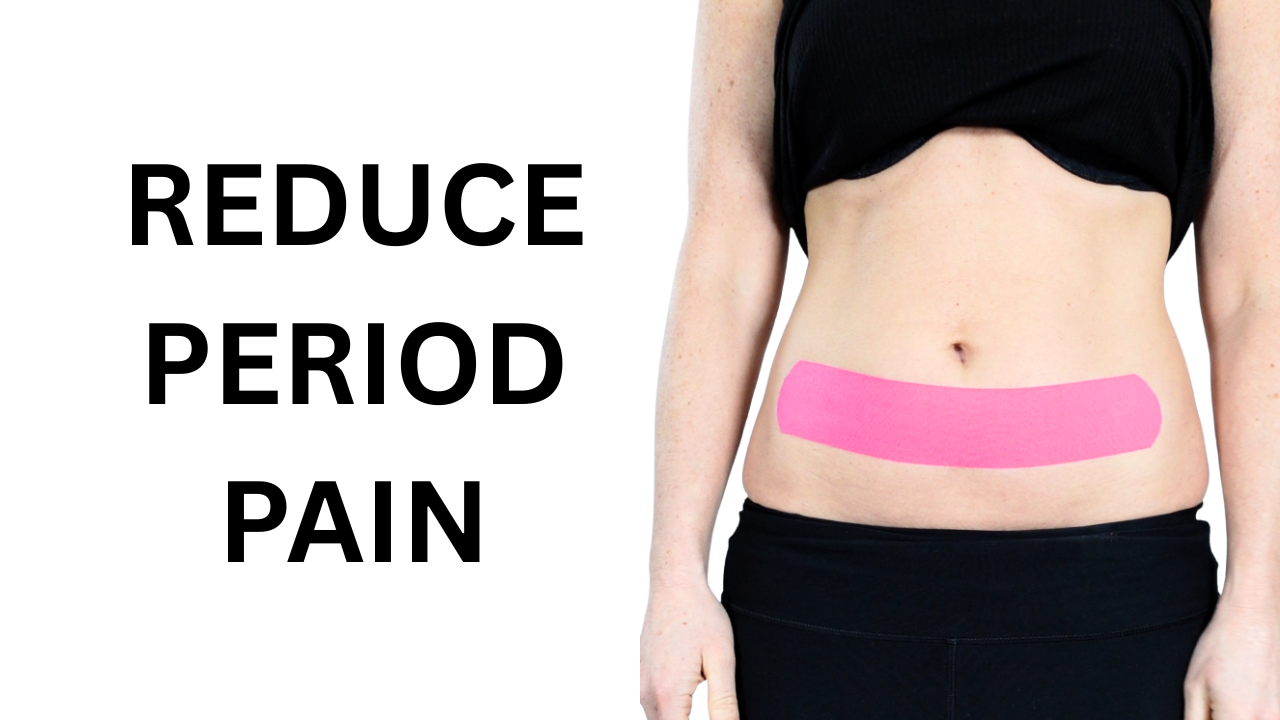
Period pain is one of the most common and disruptive pain conditions affecting women. For many symptoms are severe enough to interfere with work, exercise, sleep, and daily life.
As professionals, we are often asked about non-pharmacological options that can complement hands-on care and support self-management between sessions.
Strong evidence suggests that kinesiology taping—when applied correctly—can be a simple, low-cost, and effective tool for reducing menstrual pain, anxiety, and activity limitation.
What does the research say?
Research involving more than 500 women shows that kinesiology taping applied to the lower abdomen and lower back can:
* Significantly reduce menstrual pain intensity
* Reduce anxiety related to period pain
* Decrease reliance on pain-relief medication
* Help individuals remain more active during their cycle
A recent systematic review and meta-analysis by Chan et al. (2025) analysed 17 randomised controlled trials (RCTs), the gold standard in clinical research. Most studies compared true kinesiology taping with either sham taping (no stretch or incorrect placement) or no taping at all.
Across studies, participants who received correctly applied, elastic kinesiology tape consistently reported better outcomes than those in sham or no-tape groups.
Is the effect just placebo?
This is a common question.
Most of the studies included in the research used rigorous designs:
* Participants were randomly allocated to groups
* Sham taping was used (no stretch, non-elastic tape, or incorrect placement)
* Participants were blinded and did not know whether they received real or sham taping
Importantly, groups receiving no taping at all consistently reported the worst outcomes, particularly when no other treatment was provided. This strongly suggests that kinesiology taping has effects beyond placebo alone.
What causes period pain?
Primary dysmenorrhea refers to painful periods without an underlying medical condition.
The main driver is increased production of prostaglandins—hormone-like chemicals that trigger strong uterine contractions. Excessive contractions can reduce blood flow and stimulate pain-sensitive nerve endings, resulting in cramping pain that may radiate to the lower back and thighs.
Period pain is extremely common, affecting up to 97% of young women at some point, and is widely recognised as a significant public health issue.
Why kinesiology tape?
Kinesiology tape is elastic, breathable, and designed to move with the body. When applied with stretch over the lower abdomen and lumbar–sacral region, it may help by:
* Modulating sensory input and pain perception
* Providing gentle, continuous stimulation over the skin
Importantly for professionals, taping can be taught as a self-management strategy, empowering clients to manage symptoms independently.
How to self-apply kinesiology tape for period pain
Tape choice
* Use elastic kinesiology tape (RockTape)
* A standard-strength adhesive is typically sufficient
Skin safety
Tape allergy is rare, but skin irritation can occur—particularly in individuals with sensitive skin.
* Do not use tape if sensitivity is suspected
* Remove immediately if itching, redness, or irritation occurs
Step-by-step application WATCH VIDEO VERSION HERE
1. **Measure and cut**
Measure approximately three-quarters of the width of the abdomen. Cut two strips of tape to this length.
2. **Prepare the tape**
Peel the backing paper from the centre of each strip, leaving a small section of backing at both ends. This improves control and comfort.
3. **Choose your stretch**
Research suggests taping with stretch is more effective than applying tape without stretch.
* Most studies used light to moderate stretch (approximately 20–30%)
* Some studies used higher stretch (75–100%)
* There is no single “perfect” amount—comfort and tolerance matter most
Clients can be encouraged to experiment within these ranges.
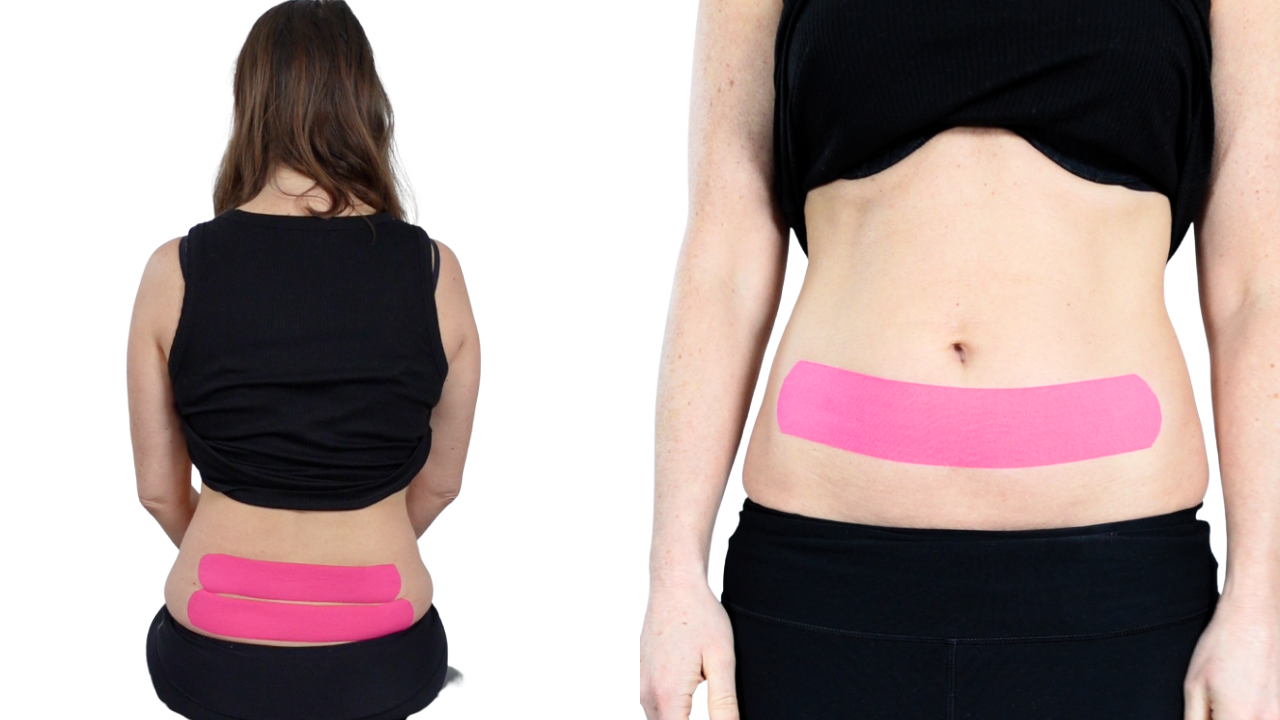
4. **Lower abdomen application**
Apply the first strip horizontally across the lower abdomen, below the belly button.
* Stretch the middle portion only
* Do not stretch the ends, as this improves comfort and reduces skin irritation
5. **Lower back application**
Apply the second strip across the lower back using the chosen amount of stretch.
* Placement can be across the lumbar spine or slightly lower over the sacrum
* One or two strips may be used depending on comfort and preference
Optional additions
Some studies also included vertical tape strips on the abdomen and lower back.
* Recommended stretch: 20–30%
* Back application is easier with assistance
These additions are optional and may be trialled if symptoms persist.
When should the tape be applied?
Research suggests taping is most effective when applied at the onset of symptoms.
* Tape was worn for up to seven days in some studies
* Daily replacement is recommended
* Allow a few hours between applications
* Always monitor skin response
Clinical considerations for massage professionals
* Taping can be used alongside massage and exercise advice
* It is well suited to self-care, outpatient, and telehealth contexts
* Some studies reported reduced analgesic use, but clients should never change prescribed medication without medical advice
Summary
Current evidence supports kinesiology taping as a safe, cost-effective, and non-invasive option for managing primary dysmenorrhea. Benefits appear greatest when tape is applied to the lower abdomen and lower back, with appropriate stretch, from the start of menstruation.
Disclaimer
This information is based on published scientific research and is provided for educational purposes only. It does not replace medical advice or diagnosis.
References
Boguszewski, D., Borowska, J., Szymańska, A., Adamczyk, J.G., Lewandowska, M. and Białoszewski, D. (2020). Effectiveness of kinesiotaping for the treatment of menstrual pain. *Physiotherapy Quarterly*, 28(4), 20–24.
Chan, W.N., Ye, F., Ho, M.H. and Lee, J.J. (2025). Efficacy of Kinesio Taping in Reducing Pain in Women With Primary Dysmenorrhea: A Systematic Review and Meta-Analysis. *Nursing & Health Sciences*, 27(4), e70236.
Hagner-Derengowska, M., Gałęcki, S., Kałużny, K., Kałużna, A., Cichosz, M., Kochański, B. and Zukow, X. (2020). The assessment of Kinesiology Taping application in the reduction of menstrual pains among female basketball players. *Pedagogy and Psychology of Sport*, 6(2), 177–187.
Kiseljak, D., Dragojević, D. and Petrak, O. (2023). Effects of Kinesio Taping method on menstrual pain: A randomized, single-blind, placebo-controlled crossover study. *Health Care for Women International*, 1–23.
Toprak Celenay, S., Kavalci, B., Karakus, A. and Alkan, A. (2020). Effects of kinesio tape application on pain, anxiety, and menstrual complaints in women with primary dysmenorrhea: A randomized sham-controlled trial. *Complementary Therapies in Clinical Practice*, 39.